Showing posts with label facts. Show all posts

Thursday, 17 October 2013

The Beauty of Death: Catacomb Saints Photographed by Paul Koudounaris


In 1578 word spread of the discovery in Rome of a network of underground tombs containing the remains of thousands of early Christian martyrs. Many skeletons of these supposed saints were soon removed from their resting place and sent to Catholic churches in Europe to replace holy relics that were destroyed during the Protestant Reformation. Once in place the skeletons were then carefully reassembled and enshrined in costumes, wigs, jewels, crowns, gold lace, and armor as a physical reminder of the heavenly treasures that awaited in the afterlife.

Over the past few years photographer Paul Koudounaris who specializes in the photography of skeletal reliquaries, mummies and other aspects of death, managed to gain unprecendented access to various religious institutions to photograph many of these beautifully macabre shrines for the first time in history. The photos have been collected into a book titled Heavenly Bodies released by Thames & Hudson early next month.


Friday, 21 June 2013

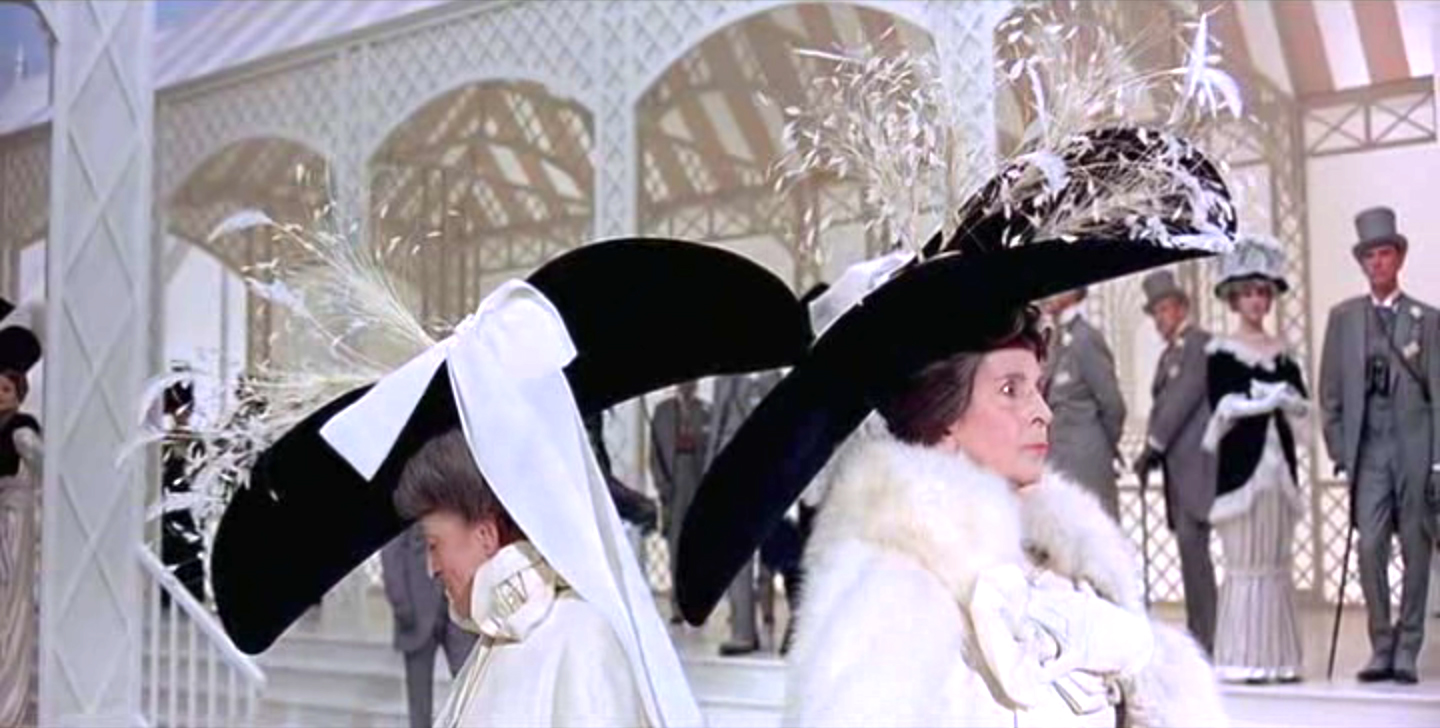
My Fair Lady (1964) Royal Ascot costumes


As the Royal Ascot season has begun, the hats are back again for a moment as a centrepiece of attention. Sadly enough, a grand format of the attire that set a golden age of the Royal Ascot had been narrowed down to the mere necessity, required by the dress code of this famous venue. As a reminder of the bygone glamour, a hallmark of this racecourse, we present you the set of caps of Royal Ascot costumes from "My Fair Lady" (starring Audrey Hepburn), brilliantly designed by Cecil Beaton, as a tribute to the times when fashion was larger than life.

The Royal Ascot is one of Europe's most famous race meetings, and dates back to 1711 when it was founded by Queen Anne. Every year Royal Ascot is attended by members of the British Royal Family, arriving each day in a horse-drawn carriage with the Royal procession taking place at the start of each race day and the raising of the Queen's Royal Standard. It is a major event in the British social calendar, and press coverage of the attendees and what they are wearing often exceeds coverage of the actual racing. The dress code is strictly enforced. For women, only a day dress with a hat is acceptable, with rules applying to the length and style of the dress. In addition, women must not show bare midriffs or shoulders. For men, black or grey morning dress with top hat is required.


"How do you do?"

An original concept art of the set design and costumes from the movie.

Thursday, 23 May 2013

The Origins of Pastel Hair Dye


As we all know, the paster-colored hair dye trend got big couple of seasons ago and, unlike the color itself, it doesn't seem to fade. On the contrary, this year like never before, the models and big names seem to flaunt it pretty heavily. As the spring finally arrived, everybody craves for a burst of color. We can spot both girls and guys on the streets of London, having their 'do's done in multiple shades. And all the independent hair dye companies seem to be well prepared for the demands of the customers - there's the whole palette available out there. Yet though you can tell there's a major domination of pastel pinks, sea foam blues, and silver whites.

If you're among the people rocking the pastel hair look you might find this interesting. Did you know that this trend isn't new at all? To be precise it is 300 years old.


Both men and women colored their hair or wig throughout the 17th and 18th centuries using a hair powder. Powdering was introduced when King Henry IV of France (1589-1610) used dark powder on his greying hair. Hair powder was originally used mostly as a degreaser. Later on, it became a symbol of upper echelon. Everyone who wanted to be treated with respect in the higher circles of society had to powder their hair. The general rule was: the stronger the color, the better. That's why we can spot slightly off-white hair on the portraits from the century. But what's the most interesting part, after a while hairdressers of the time developed a hair powder in variety of colors! One could choose from palette of white, brown, grey, orange, pink, red, blue, or violet. And it was scented as well! Soon, it became an instant sensation to powder your hair in different colors, especially in pastel shades. Unsurprisingly, the trend became particularly strong among the ladies. You can spot a variety of colored hair on the paintings as they vary from natural shades to excessive pigments. The finest known example is A Portrait of a Young Lady painted by Yermolai Kamezhenkov in 1790 (2nd row, 3rd picture) where you can spot that famous pastel pink shade. Powdered hair remained in fashion until the beginnings of the French Revolution. And that's where the craze for the pastel-colored hair really came from.


If you're up for trying the baby pink or silver white shades in an "old school" way, there's an original 1770's formula hair powder available on etsy.com for £10.23. The powder has been made of original recipe from 18th century that hasn't been altered. It's easily washable and lasts for longer as you need to use less than a regular dyer per wash.

Check out the details here and here.